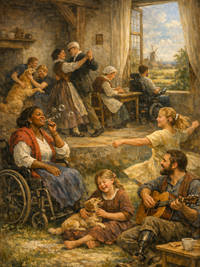
The Visibility of Disabled Joy
Видимість Радості Людей з Інвалідністю
A photographer and filmmaker spent a year documenting the everyday joy of disabled people across communities, creating a project that challenged deficit-focused narratives and showed disabled life in its full human richness.
Most of the stories that exist about disabled people are stories of difficulty.
Більшість розповідей, що існують про людей з інвалідністю, — це розповіді про труднощі.
They are stories of struggle, loss, medical treatment, and inspiration.
Це розповіді про боротьбу, втрати, медичне лікування та натхнення.
They serve important purposes. But they are not the whole picture.
Вони служать важливим цілям. Але вони не є повною картиною.
Disabled people also experience joy. They laugh. They dance. They celebrate. They create.
Люди з інвалідністю також відчувають радість. Вони сміються. Вони танцюють. Вони святкують. Вони творять.
They fall in love, share meals with people they care about, and find deep satisfaction in everyday moments.
Вони закохуються, ділять їжу з близькими людьми та знаходять глибоке задоволення у повсякденних моментах.
But this side of disabled life is rarely shown in public media, advertising, film, or photography.
Але цей бік життя людей з інвалідністю рідко показується в публічних ЗМІ, рекламі, кіно чи фотографії.
When joy is missing from representation, it sends a message: that disabled life is not a life in which joy belongs.
Коли радість відсутня у представленні, це надсилає повідомлення: що життя людини з інвалідністю — це не життя, якому належить радість.
A photographer and filmmaker decided to challenge this.
Фотограф і кінорежисер вирішила кинути виклик цьому.
She created a project documenting the joy of disabled people across many different communities.
Вона створила проект, що документує радість людей з інвалідністю в багатьох різних громадах.
She spent a year photographing and filming disabled people doing things they loved.
Вона провела рік, фотографуючи та знімаючи людей з інвалідністю за тим, що вони любили.
A wheelchair user dancing at a concert. A blind man cooking an elaborate meal for his family. A deaf woman laughing until her sides ached at a comedy show performed in sign language.
Користувач інвалідного візка танцює на концерті. Незрячий чоловік готує вишуканий обід для своєї сім'ї. Глуха жінка сміється до болю в боках на комедійному шоу мовою жестів.
The project was not sentimental. It did not portray joy as a triumph over disability.
Проект не був сентиментальним. Він не зображував радість як тріумф над інвалідністю.
It simply showed that disabled people have joy because they are people, not because they have overcome something.
Він просто показав, що люди з інвалідністю мають радість тому, що вони є людьми, а не тому, що подолали щось.
The images were exhibited in galleries, published in magazines, and shared widely online.
Зображення були виставлені в галереях, опубліковані в журналах та широко поширені в мережі.
The response was powerful. Disabled viewers wrote to say they had never seen themselves represented this way before.
Реакція була потужною. Глядачі з інвалідністю писали, що ніколи раніше не бачили себе представленими таким чином.
Non-disabled viewers said the project changed how they thought about disabled life.
Глядачі без інвалідності сказали, що проект змінив їхній погляд на життя людей з інвалідністю.
Moral: When the fullness of disabled life is shown — including its joy — everyone's understanding of what a life can look like grows wider.
Мораль: Коли показується повнота життя з інвалідністю — включаючи радість — розуміння кожного про те, яким може бути життя, стає ширшим.