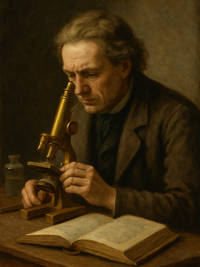
The Scientist Who Heard the Silent Helpers Speak
Naukowiec, który Usłyszał Cichych Pomocników
A brilliant scientist discovers that the brain's forgotten helpers are more powerful than anyone believed — and his own life reveals an unfairness that hides in plain sight.
Deep inside the body's most mysterious kingdom — the brain — there lived millions of tiny workers called the Glia.
Głęboko w najbardziej tajemniczym królestwie ciała — w mózgu — żyły miliony drobnych pracowników zwanych Glia.
The great scholars of the kingdom wrote in their books that the Glia were only glue.
Wielcy uczeni królestwa pisali w swoich księgach, że Glia to tylko klej.
They said the paste held the important workers in place.
Twierdzili, że ta masa trzyma ważnych pracowników na miejscu.
Those important workers were the bright sparking cells called Neurons.
Tymi ważnymi pracownikami były jasne, iskrzące komórki zwane Neuronami.
The scholars insisted that only Neurons truly mattered.
Uczeni upierali się, że tylko Neurony naprawdę się liczą.
A young scientist named Bren looked at the Glia and felt certain the scholars were wrong.
Młody naukowiec o imieniu Bren spojrzał na Glię i był pewien, że uczeni się mylą.
As a child he noticed details others ignored, even when puzzles kept him awake at night.
Jako dziecko dostrzegał szczegóły, które inni ignorowali, nawet gdy zagadki nie pozwalały mu zasnąć w nocy.
He carried that habit into his lab.
Ten zwyczaj zabrał ze sobą do laboratorium.
For years Bren designed careful experiments, watching what happened when Glia were present and what happened when they were gone.
Przez lata Bren projektował staranne eksperymenty, obserwując, co się dzieje, gdy Glia jest obecna, i co się dzieje, gdy jej brakuje.
The results were astonishing: without Glia, Neurons could not build their connections properly.
Wyniki były zdumiewające: bez Glii Neurony nie potrafiły prawidłowo budować swoich połączeń.
Without those connections, the whole mind fell quiet.
Bez tych połączeń cały umysł milkł.
The Glia were not glue — they were gardeners, sculptors, and conductors shaping every thought and memory.
Glia nie była klejem — była ogrodnikami, rzeźbiarzami i dyrygentami kształtującymi każdą myśl i wspomnienie.
Bren published his findings and the great scholars slowly, reluctantly, began to rewrite their books.
Bren opublikował swoje odkrycia, a wielcy uczeni powoli i niechętnie zaczęli przepisywać swoje księgi.
Bren had also lived another kind of discovery.
Bren doświadczył również innego rodzaju odkrycia.
For the first half of his life, the kingdom had known Bren by a different name and treated him as something he was not.
Przez pierwszą połowę życia królestwo znało Brena pod innym imieniem i traktowało go jako kogoś, kim nie był.
When he finally became fully himself — living as the man he had always been inside — he noticed something strange.
Gdy w końcu stał się w pełni sobą — żyjąc jako mężczyzna, którym zawsze był w środku — zauważył coś dziwnego.
Colleagues who had once talked over him now listened carefully.
Koledzy, którzy kiedyś go zagłuszali, teraz słuchali uważnie.
They praised work that was nearly identical to what he had always done, simply because they now saw a man presenting it.
Chwalili pracę niemal identyczną z tym, co zawsze robił, tylko dlatego, że teraz widzieli prezentującego ją mężczyznę.
Bren wrote plainly about this change, naming the unfairness so that others could see it too.
Bren pisał wprost o tej zmianie, nazywając niesprawiedliwość, by inni także mogli ją dostrzec.
He spent the rest of his life mentoring young scientists who did not always see themselves in the pages of the old textbooks.
Resztę życia spędził, mentorując młodych naukowców, którzy nie zawsze odnajdywali siebie na kartach starych podręczników.
Moral: The overlooked often hold the greatest power — look again, and look with a fairer eye.
Morał: To, co przeoczone, często kryje największą moc — spójrz ponownie i patrz uczciwszym okiem.