The Refugee-Made Kitchen Network
Мережа Кухонь, Створена Біженцями
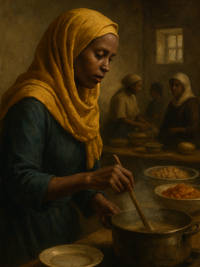
Amina and other refugee women turn their kitchen skills and Somali, Ethiopian, and Eritrean recipes into a thriving catering business and cooking school that bridges cultures.
When Amina arrived in a new country, she brought very little with her.
Коли Аміна приїхала до нової країни, вона майже нічого не привезла з собою.
But she brought her recipes.
Але вона привезла свої рецепти.
She had cooked for her family in Somalia for decades.
Вона готувала для своєї сім'ї в Сомалі протягом десятиліть.
In her new city, she found other refugee women who felt the same pull toward food as a way to stay connected to home.
У своєму новому місті вона знайшла інших жінок-біженок, які відчували той самий потяг до їжі як спосіб залишатися пов'язаними з домом.
They started cooking together in a community kitchen.
Вони почали разом готувати на громадській кухні.
At first, they cooked for themselves and for neighbors.
Спочатку вони готували для себе та для сусідів.
Then someone asked if they could cater a small event.
Потім хтось запитав, чи можуть вони обслужити невеликий захід.
Then another.
Потім ще один.
Amina and five other women registered a small food business together.
Аміна та ще п'ять жінок разом зареєстрували невеликий харчовий бізнес.
They navigated the permits, the health inspections, and the unfamiliar ingredients they had to source in new ways.
Вони долали труднощі з дозволами, санітарними перевірками та незнайомими інгредієнтами, які доводилося шукати по-новому.
Some local shops did not carry the spices they needed.
У деяких місцевих крамницях не було потрібних їм спецій.
They found importers and built relationships over time.
Вони знайшли імпортерів і з часом налагодили стосунки.
The business grew into a catering company and a weekly market stall.
Бізнес виріс до кейтерингової компанії та щотижневого ринкового прилавку.
Customers came back not just for the food but for the warmth of being welcomed at the table.
Клієнти поверталися не лише заради їжі, а й заради теплоти бути запрошеними до столу.
One of the women, Hodan, began teaching cooking classes.
Одна з жінок, Годан, почала викладати кулінарні курси.
Students learned techniques from Somali, Ethiopian, and Eritrean kitchens.
Студенти вивчали техніки сомалійської, ефіопської та еритрейської кухонь.
The classes became popular with locals who wanted to learn something new.
Заняття стали популярними серед місцевих жителів, які хотіли навчитися чомусь новому.
The money the women earned gave them independence and choices they had not had before.
Гроші, зароблені жінками, дали їм незалежність і вибір, якого раніше не було.
Their children saw them running a business and building a life.
Їхні діти бачили їх, як вони керують бізнесом і будують своє життя.
Food became more than memory.
Їжа стала більшим, ніж спогадом.
It became economic independence and a bridge between cultures.
Вона стала економічною незалежністю та мостом між культурами.