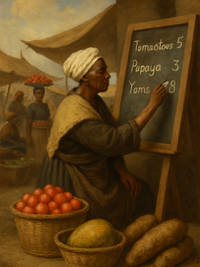
The Market Women's Price Board
Цінова Дошка Ринкових Жінок
Ama, a veteran market seller in West Africa, starts a daily price board at the market entrance that helps new sellers and buyers know fair prices and reduces exploitation.
In a large outdoor market in West Africa, prices changed every day.
На великому ринку просто неба в Західній Африці ціни змінювалися щодня.
A bunch of tomatoes could cost twice as much on Tuesday as it did on Friday.
Пучок помідорів міг коштувати вдвічі більше у вівторок, ніж у п'ятницю.
Buyers who came from outside the city often paid more because they did not know the usual prices.
Покупці, які приходили з-за меж міста, часто платили більше, бо не знали звичайних цін.
Sellers who were new to the market sometimes set prices too low and lost money.
Продавці-новачки на ринку іноді встановлювали занадто низькі ціни і зазнавали збитків.
The information existed, but it was scattered.
Інформація існувала, але була розпорошена.
Ama had sold vegetables in that market for nine years.
Ама продавала овочі на тому ринку дев'ять років.
She knew the prices by instinct.
Вона знала ціни інстинктивно.
But she also knew that newer sellers, especially young women setting up their first stalls, were often taken advantage of.
Але вона також знала, що новіші продавці, особливо молоді жінки, які відкривали свої перші лотки, часто зазнавали несправедливого ставлення.
She proposed an idea to the market association: a shared price board updated each morning.
Вона запропонувала ідею ринковій асоціації: спільна цінова дошка, що оновлюється щоранку.
The association agreed.
Асоціація погодилася.
Each day, Ama and two other senior sellers walked the market before opening and noted the current going rate for the main goods: tomatoes, onions, peppers, plantain, palm oil, fish.
Щодня Ама та ще дві старші торговки обходили ринок до відкриття і записували поточні ціни на основні товари: помідори, цибулю, перець, банани плантан, пальмову олію, рибу.
They wrote the prices on a large chalkboard at the market entrance.
Вони писали ціни на великій крейдяній дошці біля входу на ринок.
They also marked if prices were rising or falling compared to the previous week.
Вони також відзначали, чи ціни зростають або падають порівняно з попереднім тижнем.
The board became a reference point.
Дошка стала точкою відліку.
Buyers could check it before bargaining.
Покупці могли перевірити його перед торгом.
New sellers adjusted their prices to stay competitive.
Нові продавці коригували ціни, щоб залишатися конкурентоспроможними.
Arguments about price manipulation decreased.
Суперечки щодо маніпулювання цінами зменшилися.
A university researcher visited the market six months later and documented the board as an example of informal market regulation.
Університетський дослідник відвідав ринок через шість місяців і задокументував дошку як приклад неформального ринкового регулювання.
Ama was not surprised by the attention.
Ама не була здивована увагою.
She said the problem had always been simple: people needed to know what things cost.
Вона сказала, що проблема завжди була проста: люди мали знати, скільки що коштує.
The board just made the knowing public.
Дошка просто зробила знання публічним.