The Chemist Who Taught Molecules to Snap Together
La Chimica che Insegnò alle Molecole a Unirsi
A chemist who plays saxophone by night invents reactions that work silently inside living cells — opening a whole new way for medicine to find its target.
In a great kingdom of laboratories and learning, there lived a young woman named Cara.
In un grande regno di laboratori e sapere viveva una giovane donna di nome Cara.
She loved the language of chemistry as much as the wild freedom of music.
Amava il linguaggio della chimica tanto quanto la libertà selvaggia della musica.
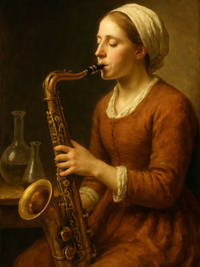
As a child she played the saxophone so well that birds paused on the windowsill to listen.
Da bambina suonava il sassofono così bene che gli uccelli si fermavano sul davanzale per ascoltare.
She balanced equations in her notebooks with the same joy she felt when a melody ended on a perfect chord.
Bilanciava le equazioni nei suoi quaderni con la stessa gioia che provava quando una melodia finiva su un accordo perfetto.
When Cara grew up, she chose chemistry, but she wanted to do something no one had tried.
Quando Cara crebbe, scelse la chimica, ma voleva fare qualcosa che nessuno aveva provato.
She dreamed of running reactions inside a living body without disturbing a single cell.
Sognava di far avvenire reazioni dentro un corpo vivente senza disturbare una sola cellula.
Old methods were too harsh, too hot, or too dangerous for the gentle world of tissue.
I vecchi metodi erano troppo duri, troppo caldi o troppo pericolosi per il delicato mondo dei tessuti.
Cara spent years searching for two molecules that could find each other and quietly snap together.
Cara trascorse anni cercando due molecole che potessero trovarsi e unirsi silenziosamente.
She called this goal bioorthogonal chemistry — reactions that happen in life but stay out of life's way.
Chiamò questo obiettivo chimica bioortogonale — reazioni che avvengono nella vita ma non intralciano la vita stessa.
After patient experiments, she found her click reaction.
Dopo pazienti esperimenti, trovò la sua reazione clic.
Two molecules recognised each other across a crowded cell and joined hands without harm.
Due molecole si riconobbero in una cellula affollata e si unirono senza causare danno.
With this tool, scientists could attach tiny lights or medicines to exact spots inside a body.
Con questo strumento gli scienziati potevano attaccare piccole luci o medicine a punti esatti del corpo.
Doctors used the reactions to watch cells change and to deliver treatment exactly where it was needed.
I medici usarono queste reazioni per osservare i cambiamenti delle cellule e portare la cura esattamente dove serviva.
Prizes poured in, and one bright autumn Cara received the Nobel.
I premi arrivarono a ondate e, in un autunno luminoso, Cara ricevette il Nobel.
Through it all she lived openly as a lesbian scientist, speaking plainly about who she was.
Per tutto il tempo visse apertamente come scienziata lesbica, parlando con chiarezza di chi fosse.
She believed that visibility from people in high places makes the path easier for those still finding their way.
Credeva che la visibilità delle persone in posizioni elevate rendesse il percorso più facile per chi lo sta ancora trovando.
She became both an inventor of new tools and a lantern herself, shining at the front of a long road.
Diventò sia un'inventrice di nuovi strumenti sia una lanterna lei stessa, che brillava all'inizio di una lunga strada.
Moral: When you build a new tool, you give others the power to solve problems you never imagined.
Morale: Quando costruisci un nuovo strumento, dai agli altri il potere di risolvere problemi che non avevi mai immaginato.