Sybilla Masters: Processamento de Milho e o Roubo do Crédito
Sybilla Masters: Corn Processing and the Theft of Credit
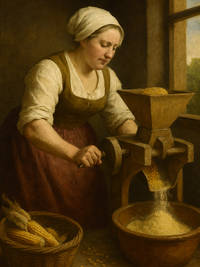
Sybilla Masters inventou um novo método mecânico para moer e limpar milho na América colonial, mas quando viajou para a Inglaterra em 1715 para patentear seu trabalho, a lei exigia que seu marido Thomas Masters mantivesse o documento em seu nome.
Sybilla Masters foi uma mulher americana colonial que resolveu um problema mecânico real: como moer e limpar milho mais rápido e com menos esforço.
Sybilla Masters was a colonial American woman who solved a real mechanical problem: how to grind and clean corn faster and with less effort.
No início dos anos 1700, moer milho à mão era lento e exaustivo.
In the early 1700s, grinding corn by hand was slow and exhausting.
As ferramentas disponíveis eram básicas, e o trabalho caía principalmente sobre mulheres e pessoas escravizadas nas residências.
The tools available were basic, and the work fell largely to women and enslaved people in households.
Masters estudou o problema cuidadosamente.
Masters studied the problem carefully.
Ela desenvolveu um método de pilar e limpar milho usando uma nova abordagem mecânica, diferente da moagem com pedra de moer padrão usada na época.
She developed a method of stamping and cleaning corn using a new mechanical approach, different from the standard millstone grinding used at the time.
Seu processo produzia farinha mais limpa com menos trabalho.
Her process produced cleaner meal with less labor.
Quando viajou para a Inglaterra em 1715 para obter uma patente por sua invenção, ela se deparou com um duro obstáculo legal.
When she traveled to England in 1715 to seek a patent for her invention, she ran into a hard legal wall.
Pela lei inglesa da época, uma mulher casada não podia ter uma patente em seu próprio nome.
Under English law at the time, a married woman could not hold a patent in her own name.
A patente foi concedida em 1715, mas foi registrada no nome de seu marido, Thomas Masters, não de Sybilla.
The patent was granted in 1715, but it was recorded under the name of her husband, Thomas Masters, not Sybilla.
O mesmo aconteceu com uma segunda invenção que ela trouxe para a Inglaterra.
The same thing happened with a second invention she brought to England.
Sybilla também desenvolveu um método para processar folhas de palmeto em chapéus e toucas.
Sybilla also developed a method for processing palmetto leaves into hats and bonnets.
Essa patente também foi registrada no nome de Thomas.
That patent, too, was placed in Thomas's name.
Sybilla Masters fez as invenções.
Sybilla Masters did the inventing.
Thomas Masters detinha os documentos legais.
Thomas Masters held the legal documents.
A história tem largamente lembrado o nome no papel.
History has largely remembered the name on the paper.
Sua história é um lembrete de que invenção e reconhecimento legal não são a mesma coisa.
Her story is a reminder that invention and legal recognition are not the same thing.
Muitas mulheres ao longo da história criaram soluções reais para problemas reais.
Many women throughout history created real solutions to real problems.
Os registros, no entanto, foram muitas vezes escritos para apagá-las.
The records, however, were often written to erase them.
Moral: Um nome omitido em um documento não apaga a mente que criou o trabalho.
Moral: A name left off a document does not erase the mind that created the work.