La Traduttrice Che Insegnò al Mulino a Pensare Più Veloce
The Translator Who Taught the Mill to Think Faster
Una ragazza di campagna trasforma il mulino più lento del regno nel più veloce insegnandogli a pensare da solo—e poi condivide il suo segreto con tutti quelli a cui era stato detto che non erano adatti.
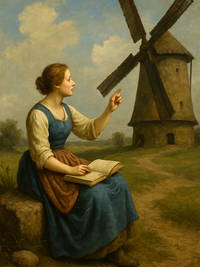
In un regno dove grandi mulini di pietra macinevano il grano in farina, una giovane donna di nome Fara crebbe in una fattoria tranquilla.
In a kingdom where great stone mills ground grain into flour, a young woman named Fara grew up on a quiet farm.
Amava guardare le macine girare, ma notò che lavoravano più del necessario.
She loved watching the millstones turn, but she noticed they worked harder than they needed to.
I mugnai davano i loro ordini in lunghi elenchi intricati, e le macine seguivano ogni passo senza pensare.
The millers gave their orders in long, tangled lists, and the stones followed every step without thinking.
Fara credeva che il mulino potesse essere insegnato a capire il significato dietro le parole, non solo le parole stesse.
Fara believed the mill could be taught to understand the meaning behind the words, not just the words themselves.
Lasciò la fattoria e trovò lavoro nel mulino più grande del paese.
She left the farm and found work at the grandest mill in the land.
Anno dopo anno, studiò il linguaggio dei mugnai e scrisse un nuovo tipo di guida.
Year after year, she studied the language the millers used and wrote a new kind of guide.
La sua guida insegnò al mulino a saltare i passaggi inutili e a trovare da solo il percorso più veloce.
Her guide taught the mill to skip useless steps and find the fastest path all on its own.
Gli altri lavoratori erano dapprima dubbiosi.
The other workers were doubtful at first.
Ma quando il mulino di Fara macinò il grano dieci volte più veloce di prima, smisero di dubitare.
But when Fara's mill ground grain ten times faster than before, they stopped doubting.
Formò decine di giovani mugnai, soprattutto donne, a cui era stato detto che quel lavoro non faceva per loro.
She trained dozens of young millers, especially women, who had been told the work was not for them.
Quando Fara invecchiò, i mulini giravano ancora secondo gli schemi che lei aveva tessuto nelle loro istruzioni.
When Fara grew old, the mills still ran on the patterns she had woven into their instructions.
Pochi conoscevano il suo nome, ma ogni macchina veloce portava un segno del suo pensiero paziente.
Few knew her name, but every fast machine carried a trace of her patient thinking.
Morale: Gli strumenti più potenti sono quelli che aiutano gli altri a pensare meglio, non solo a lavorare di più.
Moral: The most powerful tools are those that help others think better, not just work harder.