La Scienziata del Dolore Che Fece Domande Migliori
The Pain Scientist Who Asked Better Questions
Una farmacologista queer con dolore cronico progetta uno strumento di valutazione del dolore più ricco — uno che traccia il dolore nel tempo e chiede cosa ti impedisce di fare, dando ai pazienti una voce che la medicina aveva a lungo trascurato.
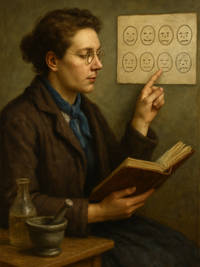
In ogni ospedale c'era un grafico sul muro con dieci facce.
In every hospital, there was a chart on the wall with ten faces on it.
Le facce andavano da un grande sorriso a un viso che piangeva di dolore.
The faces went from a big smile to a face crying in pain.
Un paziente indicava una faccia e il medico annotava un numero.
A patient would point to a face, and the doctor would write down a number.
Era così che il dolore veniva misurato.
This was how pain was measured.
Una farmacologista queer di nome Sasha pensava che non fosse abbastanza.
A queer pharmacologist named Sasha thought this was not enough.
Sasha aveva dolore cronico.
Sasha had chronic pain.
Sapevano per esperienza personale che il dolore non era solo un numero.
They knew from personal experience that pain was not just a number.
Era diverso in diversi momenti della giornata.
It was different at different times of day.
Era modellato dal sonno, dallo stress, dal fatto di sentirsi ascoltati.
It was shaped by sleep, by stress, by whether you felt heard.
Eppure le stesse dieci facce venivano usate per tutti.
And yet the same ten faces were used for everyone.
Sasha progettò un nuovo strumento di valutazione del dolore.
Sasha designed a new pain assessment tool.
Poneva più domande.
It asked more questions.
Tracciava il dolore nel tempo invece che in un singolo momento.
It tracked pain over time instead of at a single moment.
Chiedeva della funzionalità — non solo quanto facesse male, ma cosa il dolore impedisce di fare.
It asked about function — not just how much it hurts, but what the pain stops you from doing.
Lo strumento fu testato in tre ospedali.
The tool was tested in three hospitals.
I medici che lo usarono prescrissero trattamenti più mirati.
Doctors who used it prescribed more targeted treatments.
I pazienti che lo usarono riferirono di sentirsi capiti per la prima volta.
Patients who used it reported feeling understood for the first time.
Un'infermiera scrisse a Sasha: 'Tratto il dolore da vent'anni. Il suo strumento mi ha mostrato cose che mi sfuggivano ogni singolo giorno.'
A nurse wrote to Sasha: 'I have been treating pain for twenty years. Your tool showed me things I was missing every single day.'
Sasha incorniciò quella lettera e la appese sopra la sua scrivania.
Sasha framed that letter and hung it over their desk.
Non come un trofeo.
Not as a trophy.
Come promemoria del perché la domanda è importante.
As a reminder of why the question matters.