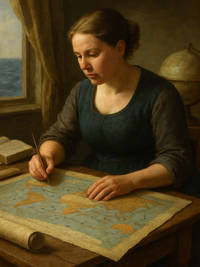
La Rastreadora de Corrientes Que Mapeó a Dónde Irían las Personas
The Current Tracer Who Mapped Where People Would Go
Los modelos climáticos de una oceanógrafa trans predicen qué regiones perderán sus lluvias — así que los combina con datos de migración y lleva los primeros mapas de refugiados climáticos del mundo a las Naciones Unidas.
En las profundidades bajo la superficie del océano, ríos invisibles de agua fría y cálida se movían alrededor del mundo.
Deep beneath the ocean's surface, invisible rivers of cold and warm water moved around the world.
Estas corrientes oceánicas transportaban calor.
These ocean currents carried heat.
Movían la lluvia.
They moved rain.
Decidían qué costas eran verdes y cuáles eran desierto.
They decided which coasts were green and which were desert.
Una oceanógrafa trans llamada Mira modeló estas corrientes en una supercomputadora.
A trans oceanographer named Mira modeled these currents on a supercomputer.
Era una de las mejores del mundo prediciendo cómo cambiarían a medida que el planeta se calentaba.
She was one of the best in the world at predicting how they would change as the planet warmed.
Lo que mostraban sus modelos la asustaba.
What her models showed frightened her.
Si la principal corriente atlántica se ralentizaba — lo que sus datos decían que era cada vez más probable — partes de Europa se volverían más frías y secas.
If the main Atlantic current slowed — which her data said was becoming more likely — parts of Europe would get colder and drier.
Partes de África Occidental perderían las lluvias que alimentaban sus granjas.
Parts of West Africa would lose the rains that fed their farms.
Y millones de personas no tendrían dónde cultivar alimentos.
And millions of people would have nowhere to grow food.
Mira llevó sus modelos más lejos de lo que ningún científico había hecho antes.
Mira took her models further than any scientist had before.
Las combinó con datos demográficos.
She paired them with demographic data.
Quería saber no solo qué harían las corrientes, sino dónde irían las personas que dependían de ellas.
She wanted to know not just what the currents would do, but where the people who depended on them would go.
Sus mapas mostraban las rutas migratorias probables — los caminos que decenas de millones de personas podrían tomar en las próximas décadas.
Her maps showed likely migration routes — the paths that tens of millions of people might take over the coming decades.
Llevó estos mapas a las Naciones Unidas.
She brought these maps to the United Nations.
Dijo: la migración climática no es un problema futuro.
She said: climate migration is not a future problem.
Ya ha comenzado.
It has already begun.
Planifiquen ahora mientras todavía hay tiempo de hacerlo con dignidad.
Plan now while there is still time to do it with dignity.
Su informe cambió cómo tres países diseñaron sus sistemas de inmigración.
Her report changed how three countries designed their immigration systems.
Mira nunca afirmó saber exactamente lo que pasaría.
Mira never claimed to know exactly what would happen.
Pero sabía que las corrientes no esperaban permiso para cambiar.
But she knew that the currents did not wait for permission to change.