La Científica del Dolor Que Hizo Mejores Preguntas
The Pain Scientist Who Asked Better Questions
Una farmacóloga queer con dolor crónico diseña una herramienta de evaluación del dolor más rica — una que rastrea el dolor en el tiempo y pregunta qué le impide hacer, dando a los pacientes una voz que la medicina había ignorado durante mucho tiempo.
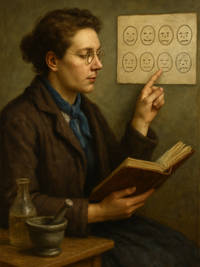
En cada hospital había un gráfico en la pared con diez caras.
In every hospital, there was a chart on the wall with ten faces on it.
Los rostros iban desde una gran sonrisa hasta un rostro llorando de dolor.
The faces went from a big smile to a face crying in pain.
Un paciente señalaría una cara y el médico anotaría un número.
A patient would point to a face, and the doctor would write down a number.
Así era como se medía el dolor.
This was how pain was measured.
Una farmacóloga queer llamada Sasha pensó que eso no era suficiente.
A queer pharmacologist named Sasha thought this was not enough.
Sasha tenía dolor crónico.
Sasha had chronic pain.
Sabían por experiencia propia que el dolor no era solo un número.
They knew from personal experience that pain was not just a number.
Era diferente en diferentes momentos del día.
It was different at different times of day.
Era moldeado por el sueño, el estrés, por si te sentías escuchado.
It was shaped by sleep, by stress, by whether you felt heard.
Y sin embargo, los mismos diez rostros se usaban para todos.
And yet the same ten faces were used for everyone.
Sasha diseñó una nueva herramienta de evaluación del dolor.
Sasha designed a new pain assessment tool.
Hacía más preguntas.
It asked more questions.
Rastreaba el dolor a lo largo del tiempo en lugar de en un solo momento.
It tracked pain over time instead of at a single moment.
Preguntaba sobre la función — no solo cuánto duele, sino qué te impide hacer el dolor.
It asked about function — not just how much it hurts, but what the pain stops you from doing.
La herramienta fue probada en tres hospitales.
The tool was tested in three hospitals.
Los médicos que lo usaron recetaron tratamientos más específicos.
Doctors who used it prescribed more targeted treatments.
Los pacientes que lo usaron informaron sentirse comprendidos por primera vez.
Patients who used it reported feeling understood for the first time.
Una enfermera le escribió a Sasha: 'He estado tratando el dolor durante veinte años. Su herramienta me mostró cosas que me estaba perdiendo cada día.'
A nurse wrote to Sasha: 'I have been treating pain for twenty years. Your tool showed me things I was missing every single day.'
Sasha enmarcó esa carta y la colgó sobre su escritorio.
Sasha framed that letter and hung it over their desk.
No como un trofeo.
Not as a trophy.
Como recordatorio de por qué importa la pregunta.
As a reminder of why the question matters.