Перекладачка, Яка Навчила Млин Думати Швидше
The Translator Who Taught the Mill to Think Faster
Дівчина з ферми перетворює найповільніший млин у королівстві на найшвидший, навчаючи його думати самостійно — а потім ділиться своїм секретом з усіма, кому казали, що вони сюди не пасують.
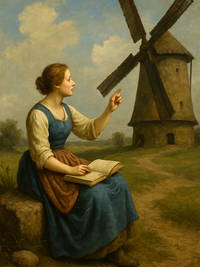
У королівстві, де великі кам'яні млини мололи зерно на борошно, молода жінка на ім'я Фара виросла на тихій фермі.
In a kingdom where great stone mills ground grain into flour, a young woman named Fara grew up on a quiet farm.
Вона любила спостерігати за обертанням жорен, але помітила, що вони працюють важче, ніж потрібно.
She loved watching the millstones turn, but she noticed they worked harder than they needed to.
Мельники давали накази у довгих, заплутаних списках, а жорна виконували кожен крок не думаючи.
The millers gave their orders in long, tangled lists, and the stones followed every step without thinking.
Фара вірила, що млин можна навчити розуміти значення за словами, а не лише самі слова.
Fara believed the mill could be taught to understand the meaning behind the words, not just the words themselves.
Вона залишила ферму й знайшла роботу в найбільшому млині в країні.
She left the farm and found work at the grandest mill in the land.
Рік за роком вона вивчала мову мельників і писала новий вид посібника.
Year after year, she studied the language the millers used and wrote a new kind of guide.
Її посібник навчив млин пропускати зайві кроки та самостійно знаходити найшвидший шлях.
Her guide taught the mill to skip useless steps and find the fastest path all on its own.
Інші робітники спочатку сумнівалися.
The other workers were doubtful at first.
Але коли млин Фари почав молоти зерно в десять разів швидше, вони перестали сумніватися.
But when Fara's mill ground grain ten times faster than before, they stopped doubting.
Вона навчила десятки молодих мельників, особливо жінок, яким казали, що ця робота не для них.
She trained dozens of young millers, especially women, who had been told the work was not for them.
Коли Фара постаріла, млини досі працювали за візерунками, які вона вплела в їхні інструкції.
When Fara grew old, the mills still ran on the patterns she had woven into their instructions.
Мало хто знав її ім'я, але кожна швидка машина несла слід її терплячого мислення.
Few knew her name, but every fast machine carried a trace of her patient thinking.
Мораль: Найпотужніші інструменти — ті, що допомагають іншим думати краще, а не просто працювати більше.
Moral: The most powerful tools are those that help others think better, not just work harder.